Buying equestrian property in Wimauma can feel exciting until the details start piling up. A pretty pasture or a nice barn does not always mean a property will work for your horses, your plans, or your budget long term. If you want to buy with confidence, you need to look beyond the listing photos and review the land itself. Let’s dive in.
Why parcel details matter in Wimauma
Wimauma is a census-designated place in Hillsborough County with 9,467 residents and about 25.03 square miles of land area, based on the 2020 Census. For horse-property buyers, that matters because Wimauma covers a broad area with parcels that can vary a lot in layout, zoning, flood exposure, and utility access.
In other words, your decision should be based on the specific parcel, not just the Wimauma name or a listing description. Two properties on the same road can have very different limits and opportunities.
Hillsborough County’s official zoning atlas is one of the most important tools in your review. The county viewer combines zoning, flood zones, and future land use, and overlay districts can add conditions beyond the base zoning district. That means land that looks rural at first glance may still have restrictions that affect barns, paddocks, grading, or other improvements.
Start with zoning and land use
Before you fall in love with the home or the view, confirm what the parcel zoning actually allows. Hillsborough County definitions include pasture for horses, stables, and other agriculture-related uses within agriculture, and the county has several agricultural zoning categories such as AM, A, AR, ASO.4, AS-1, ASC-1, AI, and PD-A.
That sounds promising for equestrian buyers, but zoning review is still essential. The key question is not whether horses are generally connected to agricultural land use. The real question is what this exact parcel allows today.
If you are planning to add features later, that review becomes even more important. New grading, barns, arenas, or other site work may trigger site development plan requirements before a natural resources permit, a building permit, or on-site land alteration can begin.
Animal density matters too
In agricultural districts, Hillsborough County limits farm animals to a maximum of three animal units per acre where they are confined, with stricter limits in environmentally sensitive areas. For buyers, this means acreage is not just a lifestyle feature. It is also part of the legal framework for how the land can function.
That is one reason turnout layout and paddock planning matter so much. A property with wet areas, poorly placed fencing, or limited usable ground may not handle horses the way the raw acreage number suggests.
Look beyond acreage count
A common question is how much land you need per horse. UF/IFAS guidance says a mature 1,100-pound horse may need about 2 to 2.5 acres on average bahiagrass, while more productive bermudagrass or winter-forage sites may support about 1 to 1.5 acres per horse.
Those are helpful planning ranges, but they are not the whole story. Drainage, forage quality, management style, and how you rotate grazing can change how well a property performs.
UF/IFAS also recommends rotational grazing for horse properties. If you are comparing two parcels with the same acreage, the one with better drainage and a more useful pasture layout may be the better long-term fit.
Separate grazing from heavy-use areas
Florida DEP’s small-scale horse best management practices describe sacrifice or high-intensity areas such as arenas, round pens, and hot-walkers. This is a smart concept to keep in mind when you tour property.
Ideally, the layout should keep heavy-use zones separate from your best grazing ground. That helps protect pasture quality and can make daily horse management easier and more efficient.
Review barns and structures carefully
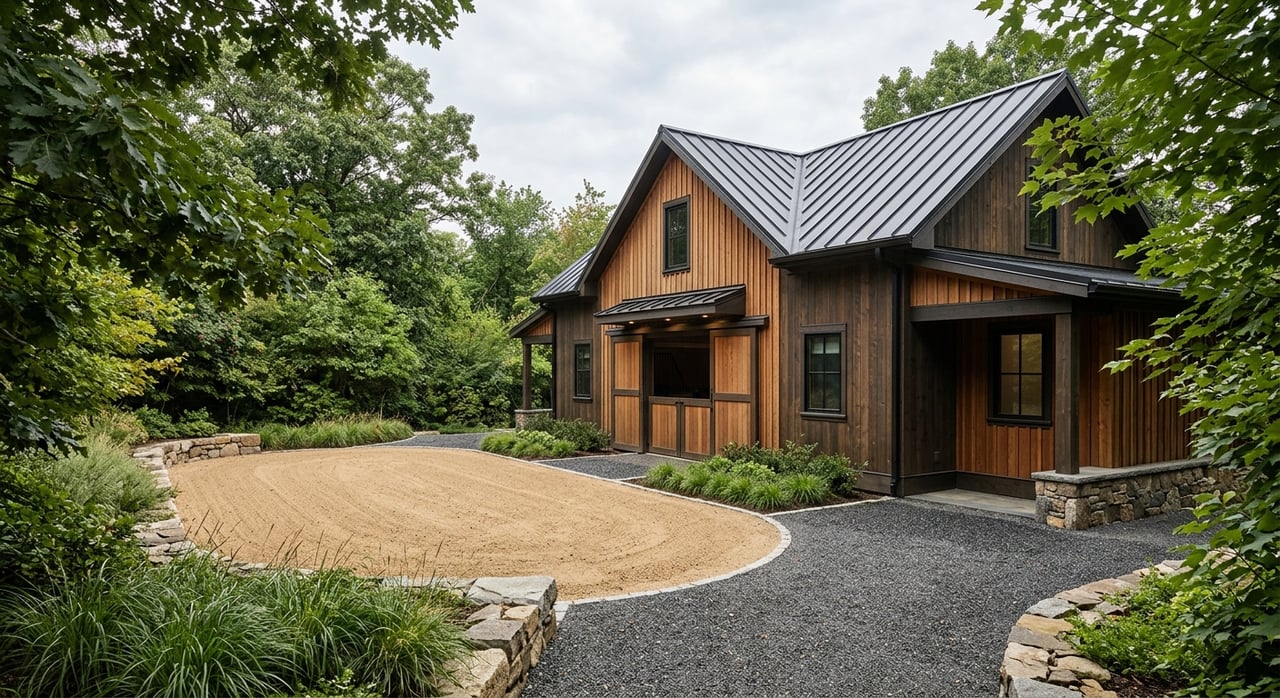
A barn can be a major selling point, but it should never be judged on appearance alone. Under Hillsborough County code, accessory structures generally cannot exceed 15 feet in height, but accessory agricultural structures such as barns and silos are treated separately and follow agricultural setback rules instead of the standard accessory-structure cap.
That distinction is important when you are evaluating an existing barn or thinking about building one later. The right question is not just whether the barn looks functional. You also want to know how the structure fits the parcel’s zoning and setback requirements.
Ask practical questions during showings
When you walk an equestrian property, pay attention to how the improvements work together. A useful setup often comes down to flow, not just square footage.
Consider these questions:
- Is the barn placed conveniently for turnout and daily chores?
- Is there room for trailer turns and service access?
- Can feed deliveries and equipment move through the site without crossing muddy or fragile areas?
- Does the current layout leave enough usable space for paddocks or pasture rotation?
Check water, well, and septic early
Water is a daily need, not a minor detail. UF/IFAS says horses should have about 10 to 12 gallons of clean water per day, so dependable water access is essential when you evaluate a property.
If the parcel uses a private well, the Florida Department of Health says well owners are responsible for making sure the water is safe and strongly recommends annual bacteria and nitrate testing. In Hillsborough County, the health department also handles septic system permitting and inspections.
That makes well and septic review a practical part of your due diligence. You want to know not only what exists on the property, but also whether it supports your intended use.
Confirm utility service areas
Some parcels may be inside the county’s potable water or wastewater service areas, while others may rely on private systems. Hillsborough County publishes utility service-area and wastewater infrastructure maps that show where public service is available.
This can affect both your current costs and your future plans. If you hope to expand the property’s use, utility availability can become a major factor.
Flood zones and wetlands can change everything
On acreage, flood and environmental conditions can shape where you place a house pad, barn, driveway, paddocks, or arena. Hillsborough County publishes flood-hazard layers based on FEMA data, including current effective 2022 flood layers with monthly updates.
For buyers, this means flood review should happen early. It is easier to ask hard questions before you make an offer than after you discover parts of the parcel are less usable than expected.
Wetlands are a separate issue and should never be treated as a minor detail. Hillsborough County code says land alteration that destroys or impairs wetlands is prohibited unless approved by the Environmental Protection Commission, and SWFWMD says activities affecting wetlands and surface waters can require authorization.
Why environmental review matters
Wet areas can affect more than just where horses graze. They can impact fencing, grading, barns, arenas, access roads, and future improvements.
If wetlands, flood boundaries, or drainage patterns are unclear, a simple resale showing is usually not enough. This is where parcel-level due diligence becomes especially important.
Evaluate layout for daily horse life
A great horse property should make your day easier. UF/IFAS recommends manure storage or composting on flat, dry ground, near but not immediately next to barns, with access for both foot traffic and machinery and away from waterbodies behind a buffer strip.
That guidance shows why layout matters so much. The best equestrian properties are not always the ones with the most acreage. They are often the ones with the most workable site plan.
Think through how you would actually use the land each day. Feeding, turnout, mucking, deliveries, trailer parking, and equipment movement all become easier when the parcel is laid out well.
A smart pre-offer checklist
Before you write an offer on equestrian property in Wimauma, verify these basics:
- Zoning and any overlay district conditions
- Flood zone and general drainage patterns
- Wetlands or other environmental constraints
- Utility service availability
- Well and septic status
- Existing barn and structure placement
- Pasture quality and turnout layout
- Space for manure handling and equipment access
- Room for trailer circulation and service vehicles
Do not overlook tax classification timing
If you want agricultural or Greenbelt tax classification, the Hillsborough County Property Appraiser handles the application. The filing deadline is March 1, and the application asks for the land’s agricultural use, livestock count, and a bona fide agricultural-use declaration.
This is worth discussing early if tax treatment is part of your purchase decision. Timing and documentation matter, and it is better to understand that process before closing rather than after.
Buying with confidence in Wimauma
Wimauma can offer excellent opportunities for horse-property buyers, but equestrian real estate is never just about the house or even the acreage count. It is about whether the parcel works as a whole for horses, land use, access, drainage, and future plans.
That is why careful due diligence matters so much. When you review zoning, flood maps, wetlands, utility access, pasture layout, and improvement potential upfront, you put yourself in a much stronger position to buy the right property the first time.
If you are exploring equestrian or acreage property and want practical guidance through the details, Houses with Hart I Paul, Stacey and Andrew Hart can help you evaluate land with a clear, experienced eye.
FAQs
What should buyers verify before buying equestrian property in Wimauma?
- Buyers should verify zoning, overlay conditions, flood zone, wetlands, utility service, well and septic status, pasture layout, barn placement, and equipment access before making an offer.
How much land do you need for horses on Wimauma property?
- UF/IFAS guidance suggests about 2 to 2.5 acres per mature horse on average bahiagrass and about 1 to 1.5 acres per horse on more productive pasture, but drainage and management also matter.
Can you build a barn on equestrian property in Wimauma?
- Possibly, but the parcel’s zoning, setbacks, and approval requirements control what can be built and where it can be placed.
Why do flood zones matter when buying horse property in Wimauma?
- Flood zones can affect the usable area of the parcel, placement of barns and driveways, drainage planning, and insurance discussions.
Do wetlands affect equestrian land use in Wimauma?
- Yes. Wetlands can limit land alteration and may affect where you can place improvements such as barns, fencing, arenas, and access routes.
What should buyers know about wells and septic on Wimauma horse property?
- Buyers should confirm whether the parcel uses private systems or public utilities, review septic status, and understand that private well owners are responsible for water safety testing.